Wednesday, 24 April 2013

#16 The deadly side

              It's pretty easy to get scared over something you don't understand. Most teens I know don't get a lot of exposure to harvesting the wild, so it's understandable they are uneasy to go out and scavenge. All you need is a guiding hand to direct you towards the good and the bad of nature. If you're out in the woods all alone and need some food, knowing what to pick is vital... So here's somethings you shouldn't be picking.

               Firstly, mushrooms. Like many have probably warned you, there are some extremely vicious ones that can cause severe illness and even death. Here are some warnings when consuming mushrooms.

              1. Always have and identification book! Species can easily be confused! There are very often false versions of commonly eaten mushrooms to be mistaken with. This is a must for all wild edibles.
              2. Eating a single bite of a toxic mushroom can get you sick right away. BUT it could take hours before you start seeing the effects from other species.
              3. Death is very possible when eating the wrong mushrooms. Don't go by old wives tales to find out whether or not their edible, just identify it properly.
              4. Mushrooms can affect people differently. Some reactions may be more severe.
              5. Illness could also mean getting hhhiiiiiggghhh!


Destroying Angel (Amanita virosa)
              The destroying angel mushroom is beautiful, but as inferred by it's name, it is deadly. This mushrooms has a frightening habit of not showing deadly symptoms until 5-24 hours after consumption.  It is often confused with the button mushrooms (common mushrooms purchased at the grocery store), as it's all white, and in it's youth has a button cap.

                        
              This mushroom is completely white, and has a 'veil' along it's stalk, and long gills under the cap. Despite their gorgeous appearance, these mushrooms will cause vomiting, diarrhoea, and ultimately cause your liver to bleed out. You'll die slowly in a matter of days.... ugh.


Here are some other mushrooms to steer clear from!
Deadly Galerina- Amanitin(These kill the most in North America!)

                     
Be prepared for bloody diarrhoea!
  
Shaggy Chantrelle- Gomphus floccosus
(Can be confused with the delicious chantrelle)

 Jack O'Lantern Mushrooms- Omphalotus olearius(Can be confused with chicken of the woods)
                                               These mushrooms do not taste like chicken


Thursday, 18 April 2013

#15 Trick or treat?


               Foraging is a peaceful way to harvest free and delicious food. As much as I encourage this practice, I feel it is natural and courteous to warn and guide new scavengers toward safe and healthy searches. Threats vary from plant to plant; sometimes it's neighboring plants, sometimes it's similar features. One slip up could result in severe illness or even death! So be adventurous, but stay smart.

              Okay firstly, buy a guide for wild goods. I've got, like, ten. You can buy an edition which specifies on greens, fruits, mushrooms, and some combine all three. A proper guide will include where to find your desired plants, when they're gowing, what they look like, and also include warnings as to what could possibly go wrong when scavenging. 

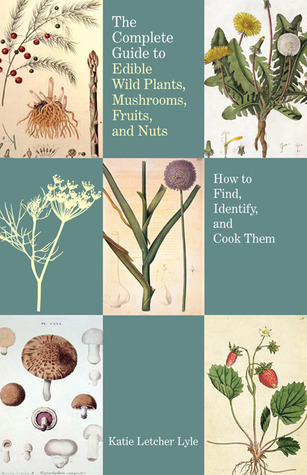
              Some titles I'd recomend is The Complete Guide to Edible Wild Plants, Mushrooms, Fruits, and Nuts by Katie Letcher Lyle. This is a great book for beginners; it's simple to follow the info! Other titles I have are usually for identifying mushrooms, but this is an absolute MUST with mushrooms. There are thousands of different mushroom species. If you find your self lost in the woods I wouldn't go looking for mushrooms as food, unless you're experienced, it's so easy to get confused.

Monday, 15 April 2013

#14 Summer and Fall Mushrooms

               Mushrooms are sprouting almost all year, here are some for summer and fall!

Summer- Oyster Mushrooms
              Oyster Mushrooms are my favorite mushrooms. You can probably pick some up in stores for a pretty penny, but you can also find these guys laying around on your next summer hike. It wasn't too long ago my family and I filled a cooler full while venturing through an old growth forest. These 'shrooms are delicious! At home we'll wash 'em, cut 'em, then fry them up with butter and cream and place 'em on top of toast! A favorite treat on mine.

What do they look like?Oyster mushrooms are a light cream to white. They have smooth caps, and long white gills lining the bottom.
Where to find them? These guys can be found on fallen trees. Preferably in old growth forest.
When? I've found some great oysters in the mid-summer! 


Fall- Puffball Mushrooms

            Next time you're going for a hike in the fall, if you see a random soccer ball resting far from the path, take a second look. The round thing you see could possibly a puff ball mushroom! These guys are edible and delicious in their earlier life. These guys are random in occurrence and prefer up lifted earth. So good luck when searching!


What do they look like?
These guys should be round and white. Smooth all the way around. Size can vary from around eggs to soccer balls. When you cut it open the gills should be the same and kinda spongy. Only eat these if the whole body is white. Be careful if there's discoloration.
Where to find them? Find them in warm fall on uplifted earth.
When? Fall
           

Wednesday, 10 April 2013

#13 'Shrooms


               Mushrooms are my past time... Not the magic kind, or the extremely deadly kind, but the delicacy kind that costs lots of money if you were to buy them. Luckily, I've been raised in a family that knows how to hunt for the most expensive and most delicious mushrooms, so I'll share SOME tips ;)

               Wait, did I just hear you say you don't like mushrooms? Well, that's because you're buying those bland old white button 'shrooms which are wrapped in blue Styrofoam and plastic. Different mushrooms have different flavors, and like most wild plants, they taste better than anything mass produced in the store. So I recommend with my whole heart that the next time you go on a hike, glance down at the forest floor for fungi.


Spring- Morels
               Early spring is the time for the most expensive mushrooms, morels. Morels can at it's most expensive price, go for around $50 a pound, but if you're lucky enough to find that many morels, you're not going to want to sell them; you're going to eat them up. Morels have a delicate flavor, and that's probably because of thier delicate growth habits. No one has ever been able to cultivate morels, and locating them can be a real challenge as they grow randomly in locations, and the weather can kill them easily. For example, last march in southern Ontario we had a bizzare week of hot summer weather, every one was in short's and tee's. The morels (and lots of other plant things) sprouted thinking it was spring. The next week the snow and typical March weather returned and killed everything. So unfortunately, we didn't get out in time to have any morels last year because of that one week. I was ticked.


What do they look like? Morels look like brains on a stick. The cap (top) of the mushroom is wrinkled into many folds which resembles the brain. They can vary from light creams to rich browns, all are delicious!
Where to find them? The forest floor, especially a few days after a rain. Look under and around leaves. A rule with mushrooms- if you don't find them, they'll find you.
When? Early spring (april - may)

Sunday, 7 April 2013

#12 More green treasure

Lamb's-Quarter
            Lamb's-quarter, goosefoot, or pigweed is a delicious discovery. Little to most people know, we can enjoy them also.
Lamb's-quarter has a very distinct look. It can be one to three feet tall, have rough, triangular shaped leaves, and has a white powder (which resembles baby powder) dusted over it.  It's grey, and sometimes streaked with red. You can find it in fields, pastures, edges of gardens backyards.


Lamb's- quarter is often compared to spinach, as it has a similar flavor, and is quenched in nutrition. Try replacing your spinach with these wild greens in your next cooked meal.


Asparagus
               Asparagus is no forgien entity to our north American plates. So how appealing is it to know you can get your dinner for free? An extra bonus, it's obviously tastier than the store bought stuff.
May is a great time to search for these guys. Look in well drained, moist, soil which are warmed by a full sun. Their location can vary, so once you find a cluster of shoots, leave a few to grow, and visit the next year. All in all, these greens like to hide.
Asparagus is good when the shoot is young and sprouting small.  When you've located it slide your fingers down the length until the shoot is bendable. This is where you should break it.


Wednesday, 3 April 2013

#11 yummy greens

                Obviously the best time for picking vegetables is usually around spring and summer, luckily, these are also the best times to adventure! Here are some recommended greens to search for!


Dandelion              Don't go eating the yellow flowers on your lawn, please. It's the dandelion leaves which are edible!
Look for these leaves in early spring before their flowers are in bloom. At this time they are crunchy and mildly bitter. After the flowers bloom (in later spring) the leaves become leathery and gross tasting.
If you're in Canada, I think you know where to find these delicious weeds!

These guys are most commonly used in salads, but they're also perfect as a green boost in a smoothie! They're also great sauteed with light butter, if you're craving savoury! Each leaf is loaded with iron, vitamins C and A, so your body will be thanking you for eating!

Fiddle heads               My family looooooves fiddle heads! We have numerous jars pickled at home to last us through the year, but in the spring we saute 'em up when their fresh. Fiddle heads are the sprout of one of the oldest plants, ostrich ferns. They have this funny name because the tips of these plants are curled like a fiddle, or the top of a violin. These delicious guys are to be found eaten in early spring (April - may), when their just a few inches of of the ground and the tender plants are curled up tightly. Look for them in wet lands like marshes, swamps or lining streams! Loaded with iron, zinc and many vitamins, these tender plants are best sauteed and sprinkled with lemon juice and pepper!


Loaded with iron, zinc and many vitamins, these tender plants are best sauteed and sprinkled with lemon juice and pepper!

Tuesday, 2 April 2013

#10 scavenger

               When I mention food in the wilderness, I don't mean hunting and trapping, I'm talking about foraging. Mother nature has a ridiculous amount of gifts to offer. If you know which ones to accept, you are in for a wonderful treat from the plant world.  But it takes experience to know how and where to hunt for your desired plant species.
               I LOVE scavenging for wild edibles! No matter the season, my family and I are hunting and harvesting some thing from the wild. Having the ability to not only explore the wild, but harness it for good, delicious use is a heart warming and soul finding activity. The plants, fruits, nuts, and
(most importantly) mushrooms are good for your soul when scavenging, but the nutritious value is good for your body. Either way it's a win/win situation, in my opinion.
               The grocery store could never supply the same adventure as foraging for wild foods. I don't understand why people even go to the grocery store in the summer! Unless you're craving tropical things, all your costs can be cut by growing or searching for what freely sprouts in the ground! It's so rewarding to find it on your own, and to know it's pesticide and hormone is an obvious bonus.
               Before you get lost in the wild, I recommend you scavenge before hand! It's always nice to have something which will fill up your belly after a long hike! Also, you always have to be careful when scavenging to prevent confusion with a species potentially poison. If you're ready to harness the natural world around you, be sure to grab some books which can help you identify your wild finds! Go and explore!